
Watching a Brown Front Move Across Your Lawn?
Speed matters with armyworms. RightWay can confirm what is feeding, treat active infestations and monitor the lawn through the rest of the season. Share your address and what you are seeing.
Why Northeast Florida Gets Armyworm Waves in the Fall
Fall armyworm moths do not overwinter in numbers this far north. Each season they migrate up from southern Florida and the Gulf, riding weather systems, and each generation pushes farther. By late summer and fall, the waves reach the Jacksonville and St. Augustine area, which is exactly when local lawns are at their most lush.
Tropical storms act like a delivery service. Moths survive surprisingly well on the wind, and outbreak years here frequently follow an active storm stretch. If a system passed through two or three weeks ago and your lawn suddenly looks scorched, armyworms deserve to be the first suspect checked.
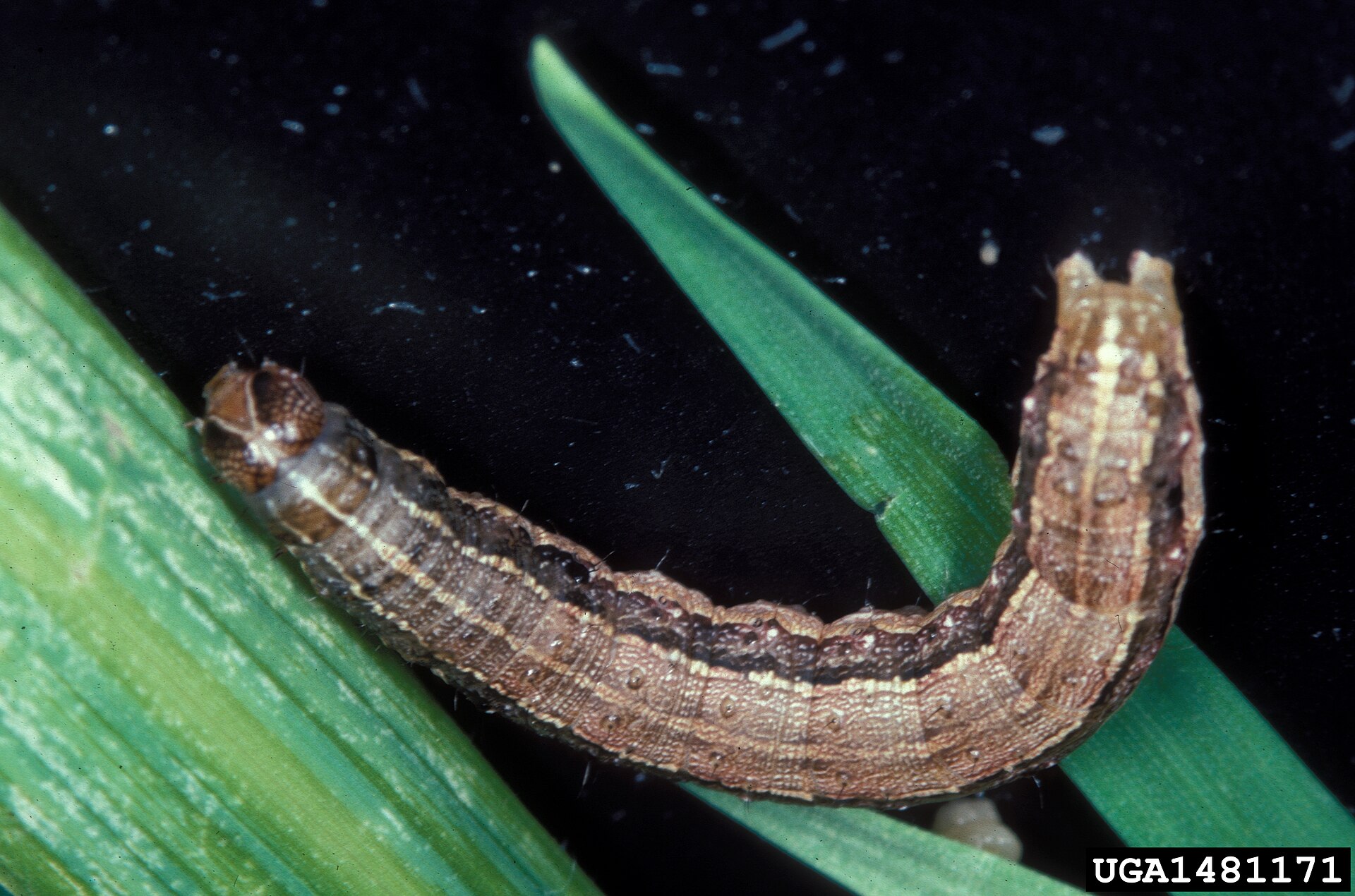
How to Identify Fall Armyworms
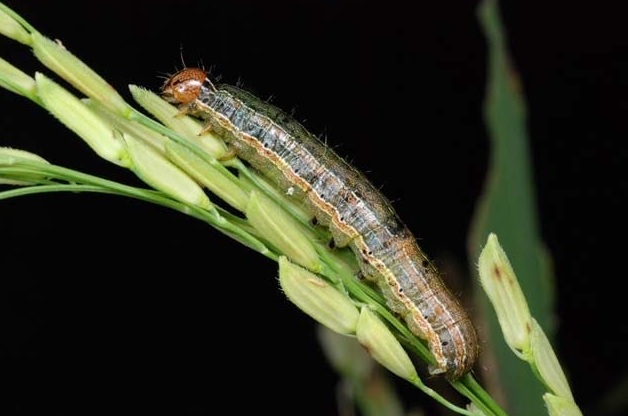
The caterpillars grow to about an inch and a half and range from light green to nearly black, with pale stripes running the length of the body. Color varies enough that it is not the reliable mark. The reliable mark is on the head: a pale, inverted Y. If you can see that Y, you have an armyworm.
Behavior is the second clue. Fall armyworms feed day and night, so a lawn being actively chewed at noon points away from night-feeding caterpillars like sod webworms. Clusters of birds picking through the grass in daylight often mark exactly where the feeding front is.
A Moving Front
Damage starts as a ragged edge and advances like a front across the lawn, sometimes visibly from day to day, as the caterpillars march and feed.
A Mowed-Down Look
Heavily hit areas look scalped or scorched: grass blades chewed to the crown in patches, with only stems left behind.
After-Storm Timing
Local outbreaks frequently show up one to three weeks after tropical systems pass through, when migrating moths arrive on the wind.
Daytime Feeders
Unlike sod webworms, which feed only at night, armyworms keep eating through the day. Birds working your lawn at noon are often feeding on them.
Scouting: The Five-Minute Soap Flush Test
You do not have to take a guess from the color of the damage. A simple soap flush brings caterpillars to the surface so you can count them:
- Go out early in the morning or near dusk, when armyworms feed most actively, and start at the edge between healthy and damaged turf.
- Mix one to two tablespoons of lemon-free dish soap into a gallon of water.
- Pour the mix slowly over about a square yard of turf at the damage border.
- Watch for two to five minutes. Caterpillars irritated by the soap wriggle to the surface, which gives you a count and a look at their size.
- Check two or three spots. Several caterpillars per square yard in an actively spreading patch means it is time to treat, not wait.
Armyworm or Sod Webworm? A 30-Second Check
Sod webworms are the other common lawn caterpillar in our area, and the two get confused constantly. The differences change how urgent the situation is:
| Clue | Fall Armyworm | Sod Webworm |
|---|---|---|
| Active when | Day and night, heaviest morning and evening | Night only; hides in thatch by day |
| Head marking | Pale, upside-down Y on the head | No Y; darker spotted body |
| Damage style | Fast-moving front that can strip large areas | Smaller scalloped patches that spread slowly |
| Peak season locally | Late summer and fall, often after storms | Summer through early fall |
While you are checking the damage border, it is also worth ruling out grub worms, which attack roots below the surface and leave turf that peels back like carpet instead of blades chewed to the crown.
Local Lawn Help From RightWay
RightWay's lawn fertilization, weed control and lawn-pest service includes monitoring for exactly this kind of fast-moving pest activity, so outbreaks get caught at the edge instead of after the lawn is stripped. Homeowners can also review service information for Jacksonville Beaches, Ponte Vedra Beach and other St. Johns County communities.
Service is available in selected Northeast Florida communities. Contact RightWay through the quote form or call 904-290-6400 with your address and a description of the damage.